Showing posts with label Photography. Show all posts

Saturday, May 23, 2009

Subi Samuel , Indian Photographer


One of India`s leading photographer Subi Samuel was voted as one of the coolest people by an Indian Television channel. Subi developed and introduced theme photography in Indian Photography scenario.Today Subi Samuel is counted among India`s leading Photographer and has acquired international prestige.

Subi has shot with a list that reads as Who`s Who of the Indian Movie Industry.His unique style of photography, imagination and quest for perfection has led him to become one of the most recognized and established photographers of recent times.

Subi Samuel`s name is synonymous with glamour and concept photography. His is a name to reckon with in the world of film publicity, commercials and publishing. But what sets him apart is his annual foray in creative photography to expand his horizons. Subi`s clientele includes not only those belonging to the film industry and print media in India but also representatives from Far East and Europe. Subi was the first film photographer to launch his own website.

Dabboo Ratnani-One of the renowned names in Indian fashion photography


Daboo Ratnani, One of the renowned names in Indian fashion photography , mostly known for his annual calendar which has become a highly notable showbiz event in India.For over a decade Dabboo Ratnani has continued to master the art of photography.

From personality portraits and advertising campaigns to fashion and magazine layouts, Dabboo has developed and showcased a discriminating and unique style of his profession. His induction into the Indian photography came about largely by chance. It started with an object, which soon became his prized possession- The Camera. His hobby turned into a passion.

Dabboo Ratnani is a leading Indian model photographer, known for his annual calendar which has become a highly notable showbiz event in India since its first publication in 1999. The calendar is compared to the Kingfisher Calendar as a pioneer of the genre of sensational calendars. He was the cover photographer for the first issue of the Indian edition of Better Homes and Gardens magazine.In 2006, he was in the jury for the Miss India contest.

Thursday, May 14, 2009

Digital photography


Digital photography is a form of photography that uses digital technology to make images of subjects. Until the advent of such technology, photography used photographic film to create images which could be made visible by photographic processing. By contrast, digital photographs can be displayed, printed, stored, manipulated, transmitted, and archived using digital and computer techniques, without chemical processing.

Digital photography is one of several forms of digital imaging. Digital images are also created by non-photographic equipment such as computer tomography scanners and radio telescopes. Digital images can also be made by scanning conventional photographic images.

Wednesday, May 13, 2009

Underwater photography


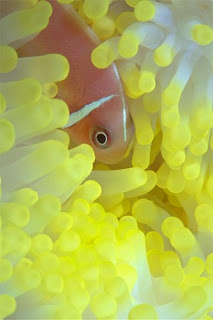
Underwater photography is the process of taking photographs while under water. It is usually done while scuba diving, but can be done while snorkeling or swimming.Underwater imaging is considered an especially challenging area of photography, since it requires very specialized equipment and techniques to be successful. Despite these challenges, it offers the possibility of many exciting and rare photographic opportunities. Animals such as fish and marine mammals are the most common subjects, but photographers also pursue shipwrecks, submerged cave systems, underwater "landscapes", and portraits of fellow divers.

The primary obstacle faced by underwater photographers is the extreme loss of color and contrast when submerged to any significant depth. The longer wavelengths of sunlight (such as red or orange) are absorbed quickly by the surrounding water, so even to the naked eye everything appears blue-green in color. The loss of color not only increases vertically through the water column, but also horizontally, so subjects further away from the camera will also appear colorless and indistinct. This effect is true even in apparently clear water, such as that found around tropical coral reefs.
Wide-angle shot of coral reef in East Timor

Underwater photographers solve this problem by combining two techniques. The first is to get the camera as close to the photographic subject as possible, minimizing the horizontal loss of color. This is best achieved by using wide-angle lenses, which allow very close focus, or macro lenses, where the subject is often only inches away from the camera. In practical terms, serious underwater photographers consider any more than about 3 ft/1 m of water between camera and subject to be unacceptable. The second technique is the use of flash to restore any color lost vertically through the water column. Fill-flash, used effectively, will "paint" in any missing colors by providing full-spectrum visible light to the overall exposure.

Since underwater photography is often performed while scuba diving, it is important that the diver-photographer be sufficiently skilled so that it remains a reasonably safe activity. Good scuba technique also has an impact on the quality of images, since marine life is less likely to be scared away by a calm diver, and the environment is less likely to be damaged or disturbed. There is the possibility of encountering poor conditions, such as heavy currents, tidal flow, or poor visibility. Generally, underwater photographers try to avoid these situations whenever possible.


Underwater photographers have several basic options for equipment:

A compact digital point and shoot camera, a compact digital camera with full exposure controls, and an SLR (single lens reflex camera). Unlike earlier amphibious or waterproof camera such as the Nikonos, which is designed specifically for use underwater, these cameras now require a housing to keep them water proof. Nikon discontinued the Nikonos series in 2001 and it is a 35mm film system, so it is somewhat obsolete, but some photographers still choose this approach. Sea and Sea continues to manufacture an amphibious range finder camera that utilizes 35mm film, the Motor Marine III.

Housings are specific to the camera and are made of several things from inexpensive plastic to high-priced aluminum cases. Housings allow many options, since the user can choose a housing specific to their everyday "land" camera, as well as utilize any lens in their collection. In practice, underwater photographers generally use either wide-angle lenses or macro lenses, both of which allow close focus, thereby eliminating the need to have excessive water between the camera and subject. Digital media can hold many more shots than standard photographic film (which rarely holds more than 36 frames). This is one of the primary advantages of using digital camera underwater, since it is impossible to change photographic film underwater. The instant feedback provides faster learning and improved creativity, which is why virtually all underwater photographers now use digital cameras.
Watertight housing Canon WP-DC600 for IXUS v2

All underwater housings are outfitted with controls knobs that access the camera inside, giving the photographer use of most of its normal functions. These housings may also have connectors to attach external flash units. Some basic housings allow the use of the flash on the camera, but the on-board flash may not be sufficiently powerful and are improperly placed for underwater applications. More advanced housings either redirect the on-board strobe to fire a slave strobe via a fiber optic cable, or physically prevent the use of the on-board strobe. Housings are made waterproof through a system of silicone o-rings at all the crucial joints.

There are optical issues with using cameras inside a watertight housing. Because of refraction, the image coming through the glass port will be distorted, in particular when using wide-angle lenses. The solution is to use a dome-shaped or fish-eye port, which corrects this distortion. Most manufacturers make these dome ports for their housings, often designing them to be used with specific lenses to maximize their effectiveness. The Nikonos series allowed the use of water contact optics: ie, lenses designed to be used whilst submerged, without the ability to focus correctly when used in air. There is also a problem with some digital cameras which do not have sufficiently wide lenses built into the camera. To solve this, there are housings made with supplementary optics in addition to the dome port, making the apparent angle of view wider. Some housings also allow for the use of wet-coupled lenses, which thread on to the exterior of the lens port and increase the field of view. These wet-coupled lenses may be added or removed underwater, allowing for both macro and wide angle photography on the same dive.

With macro lenses, the distortion caused by refraction is not an issue, so normally a simple flat glass port is used. In fact, refraction increases the magnification of a macro lens, so this is considered a benefit to the photographer, who may be trying to capture very small subjects.

Fine art photography


Fine art photography refers to photographs that are created to fulfill the creative vision of the artist. Fine art photography stands in contrast to photojournalism and commercial photography. Photojournalism provides visual support for stories, mainly in the print media. Commercial photography's main focus is to sell a product or service.One photography historian claimed that "the earliest exponent of 'Fine Art' or composition photography was John Edwin Mayall" who exhibited daguerrotypes illustrating the Lord's Prayer in 1851[20]. Successful attempts to make fine art photography can be traced to Victorian era practitioners such as Julia Margaret Cameron, Charles Lutwidge Dodgson, and Oscar Gustave Rejlander and others. In the U.S. F. Holland Day, Alfred Stieglitz and Edward Steichen were instrumental in making photography a fine art, and Steiglitz was especially notable in introducing it into museum collections.

Until the late 1970s several genres predominated, such as; nudes, portraits, natural landscapes (exemplified by Ansel Adams). Breakthrough 'star' artists in the 1970s and 80s, such as Sally Mann and Robert Mapplethorpe, still relied heavily on such genres, although seeing them with fresh eyes. Others investigated a snapshot aesthetic approach.

American organizations, such as the Aperture Foundation and the Museum of Modern Art, have done much to keep photography at the forefront of the fine arts.

Fashion photography


Fashion photography is a genre of photography devoted to displaying clothing and other fashion items. Fashion photography is most often conducted for advertisements or fashion magazines such as Vogue, Vanity Fair, or Allure. Over time, fashion photography has developed its own aesthetic in which the clothes and fashions are enhanced by exotic locations and story lines or could be having great models with different vehicles or animals just to be an eye catching effect.Photography was developed in the 1830s, but the earliest popular technique, the daguerreotype, was unsuitable for mass printing.[1] In 1856, Adolphe Braun published a book containing 288 photographs of Virginia Oldoini, Countess de Castiglione, a Tuscan noblewoman at the court of Napoleon III. The photos depict her in her official court garb, making her the first fashion model.[2]

In the first decade of the 20th century, advances in halftone printing allowed fashion photographs to be featured in magazines. Fashion photography made its first appearance in French magazines such as La mode practique. In 1909, Condé Nast took over Vogue magazine and also contributed to the beginnings of fashion photography. Special emphasis was placed on staging the shots, a process first developed by Baron Adolf de Meyer, who shot his models in natural environments and poses. Vogue was followed by its rival, Harper's Bazaar, and the two companies were leaders in the field of fashion photography throughout the 1920s and 1930s. House photographers such as Edward Steichen, George Hoyningen-Huene, Horst P. Horst and Cecil Beaton transformed the genre into an outstanding art form. Europe, and especially Germany, was for a short time the leader in fashion photography.

But now with the change in time every country has taken considerable measures to promote the field of photography.

In the Mid 1940s as World War II approached the focus shifted to the United States, where Vogue and Harper's continued their old rivalry. House photographers such as Irving Penn, Martin Munkacsi, Richard Avedon, and Louise Dahl-Wolfe would shape the look of fashion photography for the following decades. The artists abandoned their rigid forms for a much freer style. In 1936 Martin Munkacsi made the first photographs of models in sporty poses at the beach. Under the artistic direction of Alexander Brodovich, the Harper's Bazaar quickly introduced this new style into its magazine.

After the deaths of Richard Avedon, Helmut Newton and Herb Ritts, some of today's most famous fashion photographers are, Patrick Demarchelier, Steven Meisel, Mario Testino , and Annie Leibovitz.

Friday, April 24, 2009

Photography


Photography (IPA: [fә'tɒgrәfi] or IPA: [fә'tɑːgrәfi][1]) (from Greek φωτο and γραφία) is the process, activity and art of creating still or moving pictures by recording radiation on a sensitive medium, such as a film, or an electronic sensor. Light patterns reflected or emitted from objects activate a sensitive chemical or electronic sensor during a timed exposure, usually through a photographic lens in a device known as a camera that also stores the resulting information chemically or electronically. Photography has many uses for business, science, art and pleasure.
Lens and mounting of a large-format camera.
An historic camera: the Contax S of 1949 — the first pentaprism SLR.
Nikon F of 1959 — the first 35mm film system camera.
Late Production Minox B camera with later style "honeycomb" selenium light meter

The word "photography" comes from the Greek φώς (phos) "light" + γραφίς (graphis) "stylus", "paintbrush" or γραφή (graphê) "representation by means of lines" or "drawing", together meaning "drawing with light." Traditionally, the products of photography have been called negatives and photographs, commonly shortened to photos.

The discipline of making lighting and camera choices when recording photographic images for the cinema is dealt with under Cinematography

Followers